To support young faculty in tackling challenges in interdisciplinary research and building a high-quality academic exchange platform, the School of Information and Communication, NKU successfully held the Fusion of Dedication to Public Interests and All-round Capability Academic Salon for Young Faculty at noon on November 26 at Room 108, Xiushan Hall, Jinnan Campus. The theme of this session was Practices and Insights in Interdisciplinary Research. The event was moderated by Associate Professor Yu Mengli and featured a dialogue led by Professors Wang Xiaohui and Li Ying. Focusing on four key areas - research topic selection, interdisciplinary collaboration, project advancement, and paper publication - the experts offered in-depth academic guidance to young faculty.
With dialogue + open discussion as its main format, the event fostered a relaxed yet productive atmosphere, encouraging spontaneous idea exchanges and scholarly discussions. Prior to the event, the School solicited open-ended questions from young faculty, covering dimensions such as research path exploration, methodological integration, challenges in cross-disciplinary collaboration, and career development planning. This groundwork enabled the experts to provide targeted advice and insights.
Professor Fan Zhenjia, Vice Dean of the School of Information and Communication, opened the session by outlining key institutional initiatives such as discipline differentiation, student recruitment and training, and degree program design. He emphasized that the School currently shoulders the mission of promoting interdisciplinary integration across multiple disciplinary categories and encouraged the continued development of the academic salon series.
During the dialogue, Professors Wang Xiaohui and Li Ying drew on their extensive academic experience to share insights and reflections on interdisciplinary research practices. Professor Wang adopted a conversational style to discuss international communication and interdisciplinary integration, emphasizing the core principle of anchoring national needs and leveraging disciplinary strengths. He illustrated this with examples from NKU's international communication research and student participation in telling Nankai stories, demonstrating practical approaches to integrating journalism and communication studies with international communication. He also highlighted how to maintain disciplinary characteristics and practical value in collaborative efforts. From the perspective of information resources management, Professor Li outlined the core logic of interdisciplinary topic selection, stressing the importance of grounding research in one's own discipline while identifying interdisciplinary intersections. Drawing on examples such as disinformation detection and assessments of government information quality, she dissected practical approaches and clearly explained how to maintain disciplinary distinctiveness in interdisciplinary collaboration. She emphasized that solid theoretical foundations are essential to ensuring the professionalism and credibility of research outcomes.
During the open discussion session, young faculty actively engaged around questions submitted earlier, delving into topics such as effective integration of methodologies in interdisciplinary research, the division of responsibilities in collaborative cross-disciplinary projects, and key considerations for avoiding pitfalls when submitting interdisciplinary papers. The two professors addressed each question in detail, offering actionable suggestions grounded in representative cases.
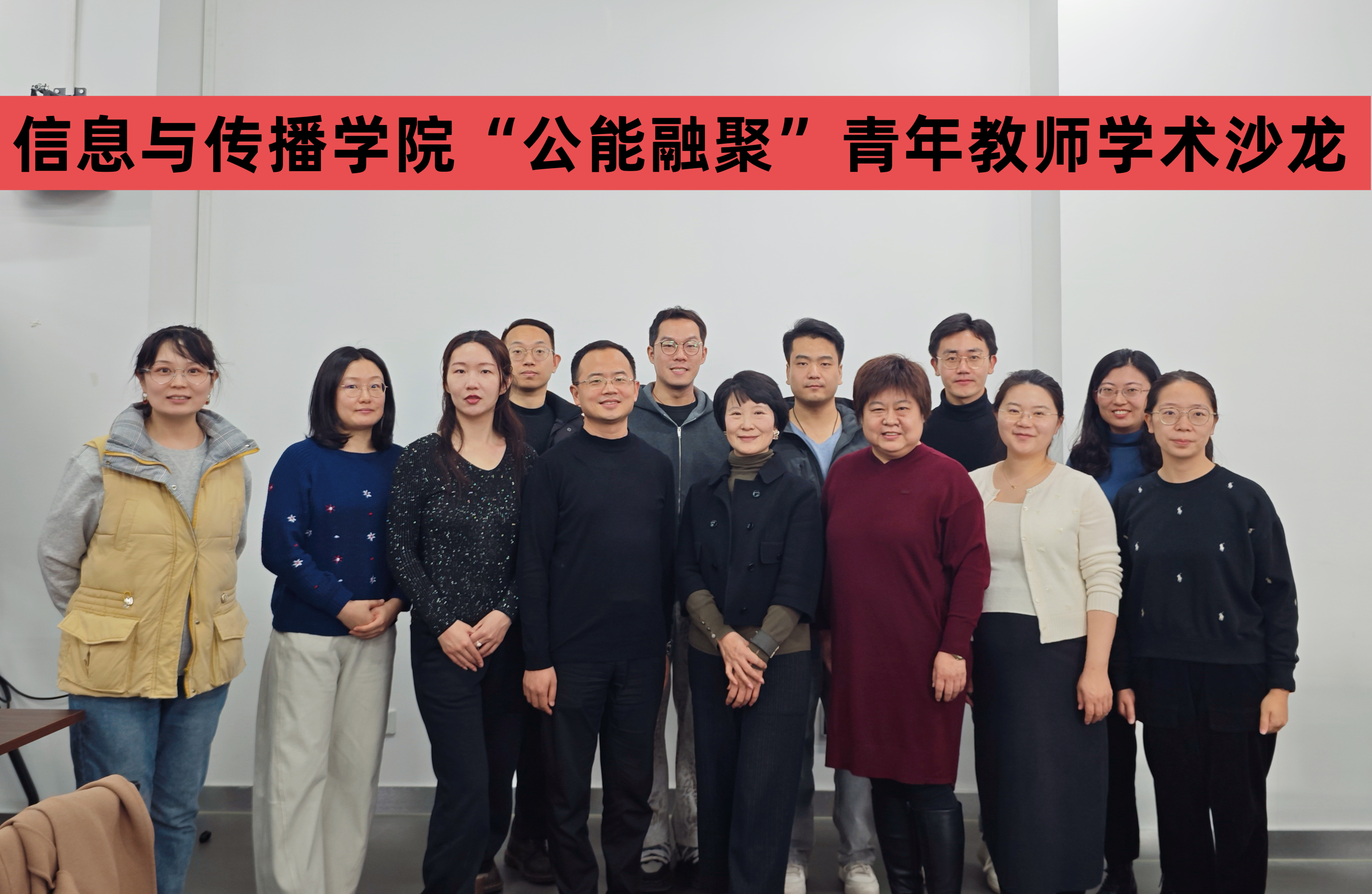
Aligned with the development needs of young faculty, this academic salon not only mapped out practical pathways for interdisciplinary research but also built a bridge for deeper engagement between experts and young faculty. Moving forward, the School will continue to prioritize the development of young faculty. The Fusion of Dedication to Public Interests and All-round Capability Academic Salon for Young Faculty, as part of a series of activities, will serve as a regular platform for academic exchange. These sustained efforts will support young faculty in making steady progress in interdisciplinary research and provide strong support and momentum for the School's high-quality disciplinary development.