On the afternoon of November 6, Professor Fan Zhenjia, Vice Dean of the School of Information and Communication, joined the Appointment with Mentors - Afternoon Tea for Communication between Teachers and Students and delivered a lecture titled Seeking Truth from Facts: Postgraduate Research Topic Selection and Implementation for Real-World Problems in Room 215 of Xiushan Hall. Drawing on his extensive research and fieldwork experience, Professor Fan delivered a session that blended theoretical insight with practical value, helping students navigate topic selection challenges and clarify their research direction.
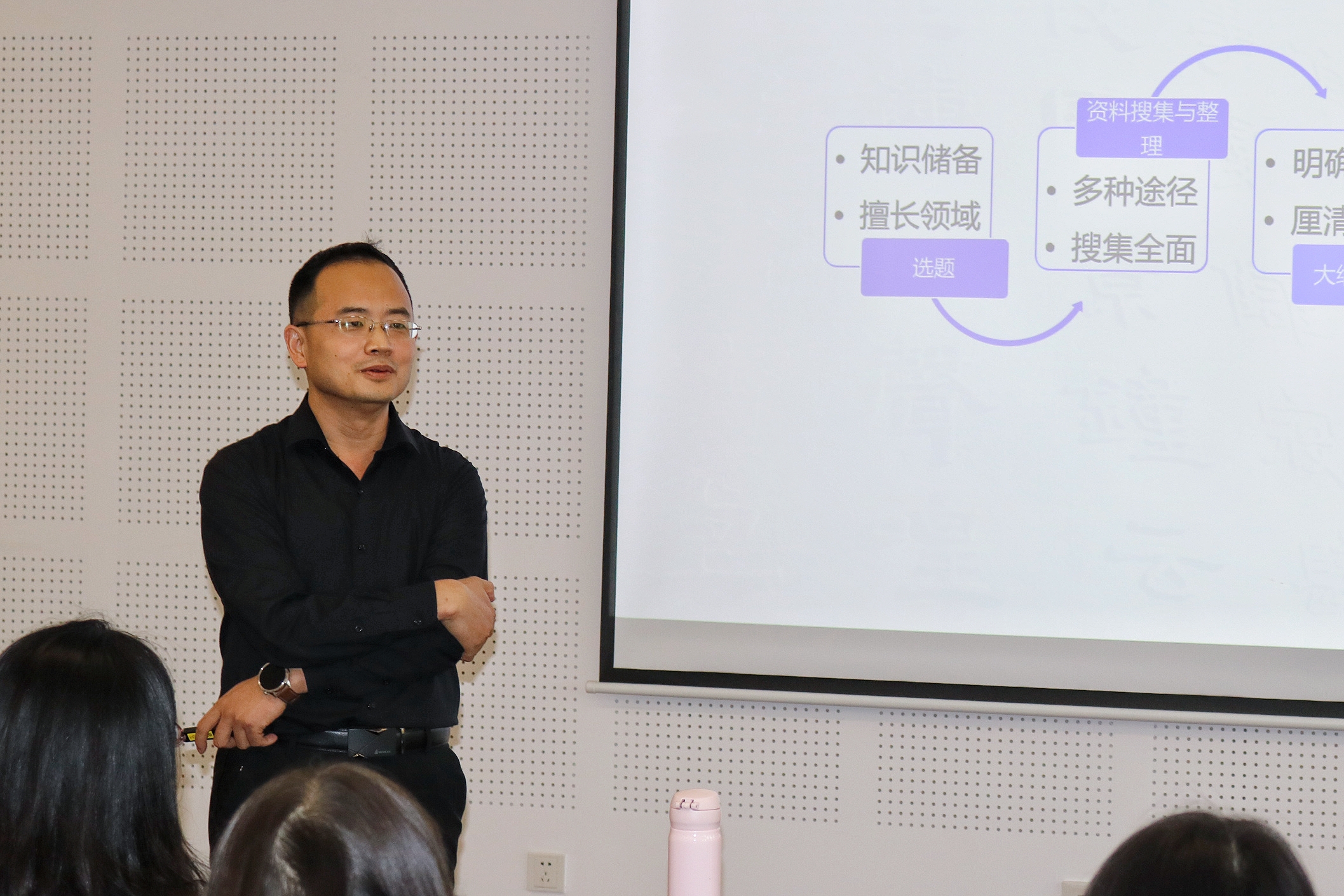
At the beginning of the lecture, Professor Fan stressed that postgraduates need to develop the ability to distill academic questions from real-life problems, grounding their research in reality to identify issues. When setting research objectives, Professor Fan categorized them into three types: exploratory, descriptive, and explanatory. By comparing their challenges, characteristics, and typical cases, he recommended that theses integrate all three types to strike a balance between innovation and feasibility.
Professor Fan then introduced a principle for topic selection: aim high, stay grounded, set clear goals, and adopt feasible methods to achieve promising results. Aim high emphasizes aligning research topics with broader socioeconomic and cultural needs, while stay grounded stresses the importance of focusing on concrete, real-world issues rather than vague or overly abstract ones. Regarding research methodology, he encouraged students to leverage their disciplinary backgrounds and master practical quantitative, qualitative, or mixed methods, while ensuring methodological grounding and data validity.
Speaking on sources of research inspiration, Professor Fan offered several tips: align research with personal interests to sustain engagement; draw ideas from interactions with knowledge, people, and real-world situations through reading, interviews, and hands-on involvement; and explore interdisciplinary opportunities that transcend traditional academic boundaries. In terms of literature retrieval and utilization, he provided a systematic guide to locating and accessing various types of literature, leaving a lasting impression on the students.
In conclusion, Professor Fan shared insights from his fieldwork, proposing the perspective that the field is everywhere. Drawing on examples such as behavioral observations in public libraries, he illustrated the different perspectives of outsider observation and participant research, and emphasized the importance of effective communication in interviews to achieve coherence between understanding and practice. Furthermore, Professor Fan recommended the book The Practice of Social Research, encouraging students to find their own pace in scientific research and balance scholarly pursuits with sustained enthusiasm.
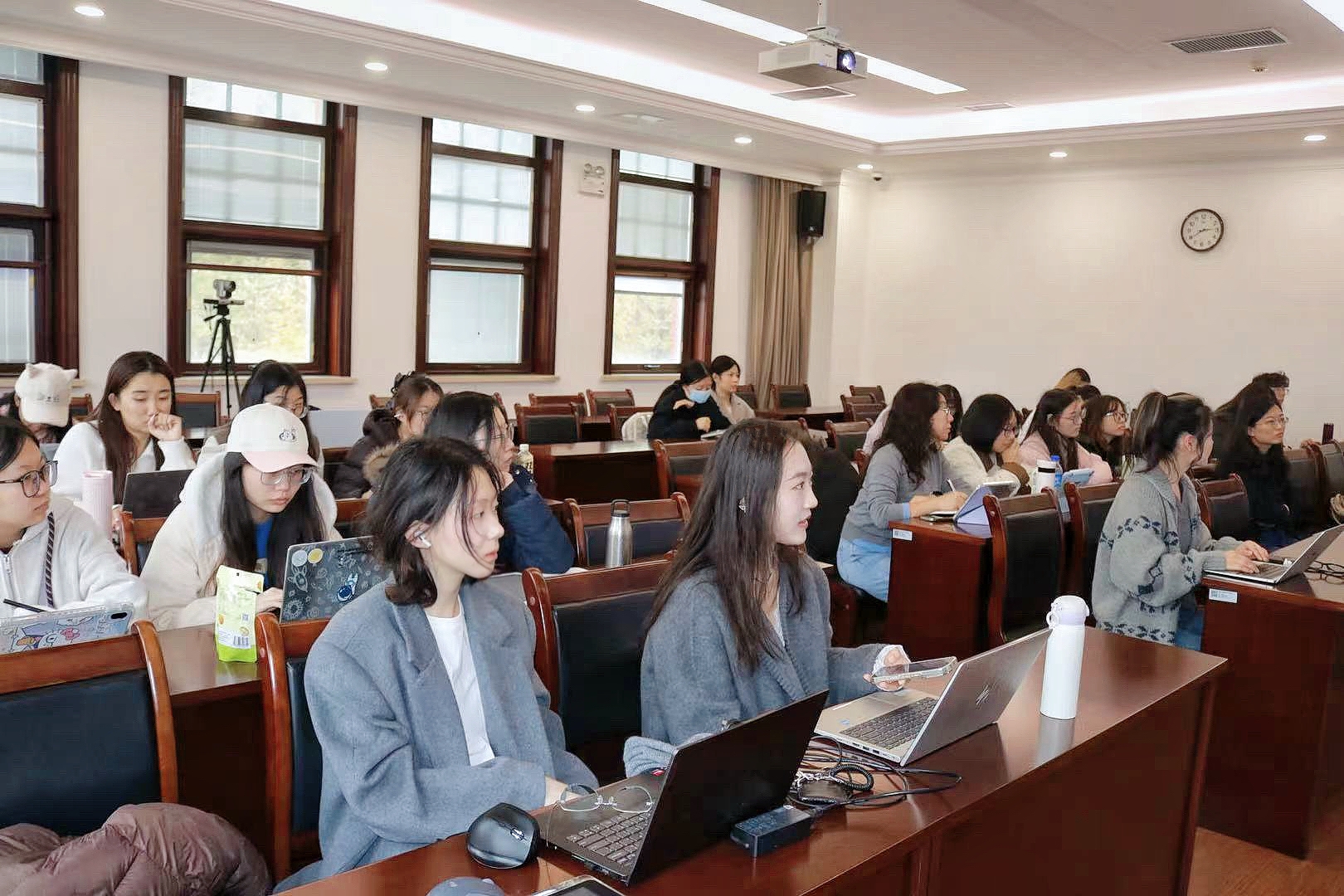
Focusing on research topic selection, Professor Fan drew on his research experience and teaching practice to provide students with comprehensive guidance, covering topic selection, methodology, and field investigation. Looking ahead, the School's Appointment with Mentors platform will continue to invite distinguished scholars to share their research insights, helping students advance steadily in their academic journeys and produce high-quality research with both theoretical and practical significance.